 Image 1 of 1
Yamataka, also known as Yamantaka or Vajrabhairava, is a fierce protector and wrathful manifestation of Manjushri, the Bodhisattva of Wisdom. His name is often understood as “the destroyer of death,” referring not only to physical death, but to the deeper spiritual death caused by ignorance, fear, ego, and attachment. Although his appearance is terrifying, Yamataka does not represent ordinary anger or violence. Instead, he embodies enlightened wrath — the powerful energy of wisdom that confronts and destroys the forces that keep beings trapped in suffering.
Yamataka’s fierce form is meant to shock the mind out of illusion. His many heads, arms, and legs symbolize his vast power, awareness, and ability to act in many ways for the benefit of beings. The buffalo-like head recalls Yama, the Lord of Death, showing that Yamataka has conquered death itself. His flames represent the burning away of ignorance, while his skull ornaments and ritual implements symbolize the transformation of fear, desire, and destructive emotions into awakened wisdom.
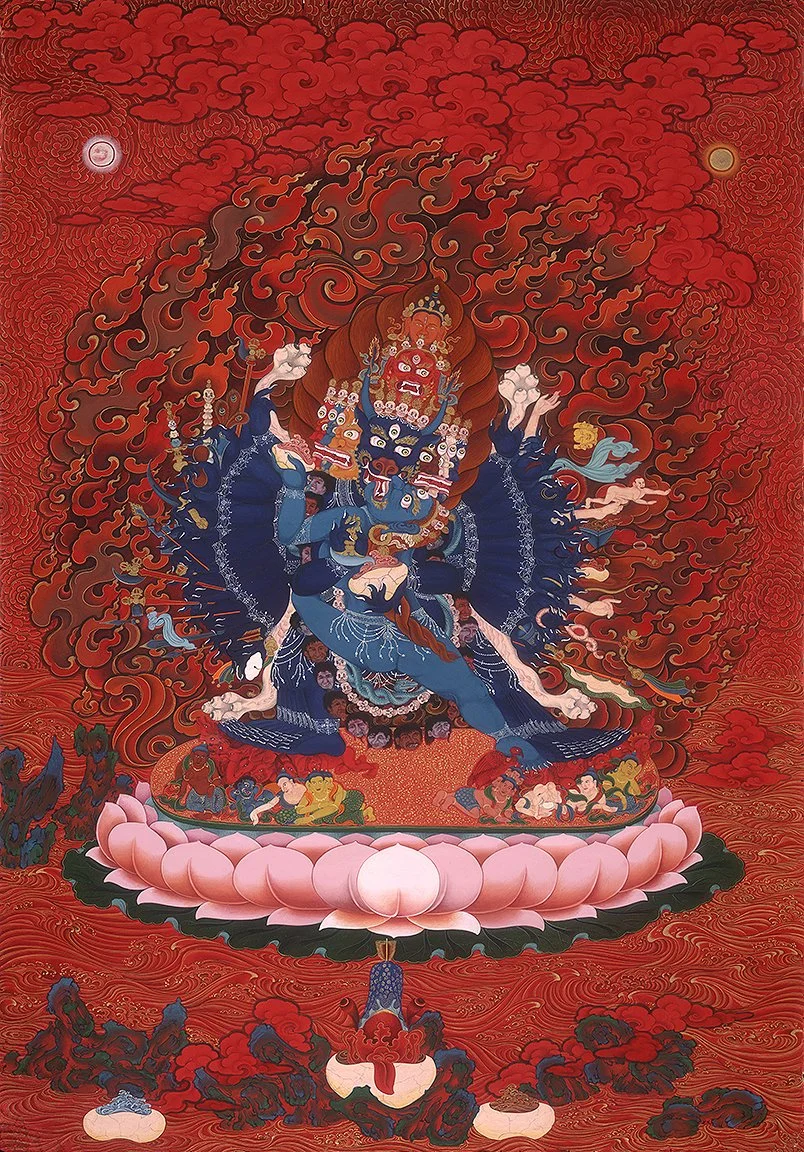
In this artwork, Yamataka appears in a dramatic blue-black form, surrounded by blazing red flames and storm-like clouds. He stands powerfully on a lotus throne, trampling figures that represent ego, delusion, and negative forces. His many arms hold ritual weapons and sacred objects, showing his ability to cut through obstacles from every direction. The intense red background, fire, offerings, and fierce movement create an atmosphere of overwhelming spiritual power. Yet beneath the wrathful imagery is a compassionate purpose: Yamataka protects the path to awakening by destroying ignorance at its root.
Yamataka, also known as Yamantaka or Vajrabhairava, is a fierce protector and wrathful manifestation of Manjushri, the Bodhisattva of Wisdom. His name is often understood as “the destroyer of death,” referring not only to physical death, but to the deeper spiritual death caused by ignorance, fear, ego, and attachment. Although his appearance is terrifying, Yamataka does not represent ordinary anger or violence. Instead, he embodies enlightened wrath — the powerful energy of wisdom that confronts and destroys the forces that keep beings trapped in suffering.
Yamataka’s fierce form is meant to shock the mind out of illusion. His many heads, arms, and legs symbolize his vast power, awareness, and ability to act in many ways for the benefit of beings. The buffalo-like head recalls Yama, the Lord of Death, showing that Yamataka has conquered death itself. His flames represent the burning away of ignorance, while his skull ornaments and ritual implements symbolize the transformation of fear, desire, and destructive emotions into awakened wisdom.
In this artwork, Yamataka appears in a dramatic blue-black form, surrounded by blazing red flames and storm-like clouds. He stands powerfully on a lotus throne, trampling figures that represent ego, delusion, and negative forces. His many arms hold ritual weapons and sacred objects, showing his ability to cut through obstacles from every direction. The intense red background, fire, offerings, and fierce movement create an atmosphere of overwhelming spiritual power. Yet beneath the wrathful imagery is a compassionate purpose: Yamataka protects the path to awakening by destroying ignorance at its root.