 Image 1 of 1
Heruka represents the fierce, transformative power of awakened wisdom. In Tibetan Buddhism, Heruka is not a symbol of anger in the ordinary sense, but of enlightened energy that cuts through ignorance, ego, and attachment. His wrathful appearance expresses the force needed to overcome delusion and transform destructive emotions into wisdom, compassion, and spiritual freedom.
Heruka is often shown in a dynamic, powerful form surrounded by flames, symbolizing the burning away of obstacles and impurities. His intense expression, ornaments, and ritual implements represent the fearless activity of enlightenment — the ability to confront suffering directly rather than avoid it. In this way, Heruka reminds the practitioner that even difficult emotions can become a path to awakening when transformed through awareness and discipline.
In sacred art, Heruka’s form is rich with symbolic meaning. His fierce posture represents mastery over ego and illusion, while the flames around him signify purification and spiritual power. When depicted in union with his consort, the image symbolizes the inseparability of wisdom and compassionate method, as well as the union of bliss and emptiness. Heruka ultimately represents the awakened mind in its most powerful form: fearless, compassionate, and completely free.
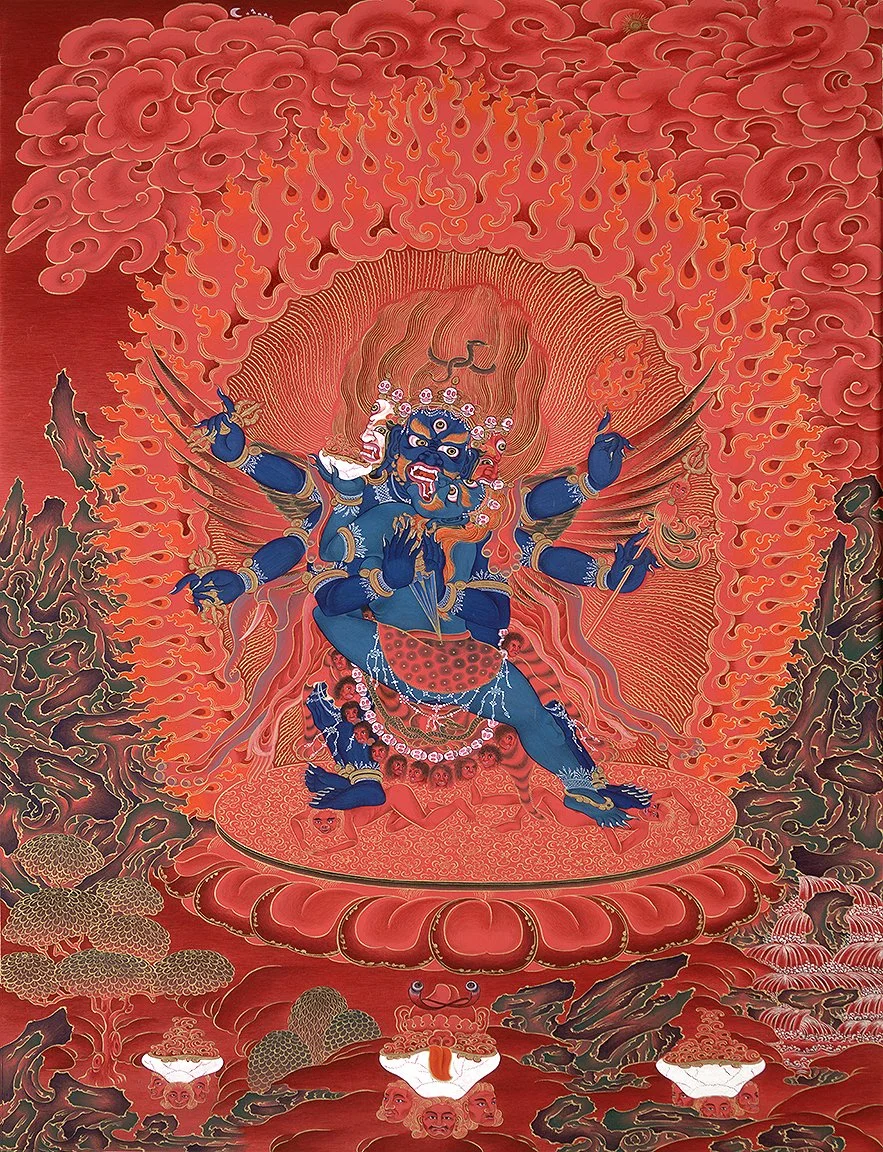
In this artwork, Heruka appears in a fierce, dynamic form surrounded by flames, symbolizing the burning away of ignorance, ego, and obstacles to awakening. His blue body, wrathful expression, skull ornaments, and ritual implements express enlightened power rather than ordinary anger. Shown in union with his consort, the image represents the inseparability of wisdom and compassionate action, while the figures beneath his feet symbolize the defeat of delusion, attachment, and negative forces.
Heruka represents the fierce, transformative power of awakened wisdom. In Tibetan Buddhism, Heruka is not a symbol of anger in the ordinary sense, but of enlightened energy that cuts through ignorance, ego, and attachment. His wrathful appearance expresses the force needed to overcome delusion and transform destructive emotions into wisdom, compassion, and spiritual freedom.
Heruka is often shown in a dynamic, powerful form surrounded by flames, symbolizing the burning away of obstacles and impurities. His intense expression, ornaments, and ritual implements represent the fearless activity of enlightenment — the ability to confront suffering directly rather than avoid it. In this way, Heruka reminds the practitioner that even difficult emotions can become a path to awakening when transformed through awareness and discipline.
In sacred art, Heruka’s form is rich with symbolic meaning. His fierce posture represents mastery over ego and illusion, while the flames around him signify purification and spiritual power. When depicted in union with his consort, the image symbolizes the inseparability of wisdom and compassionate method, as well as the union of bliss and emptiness. Heruka ultimately represents the awakened mind in its most powerful form: fearless, compassionate, and completely free.
In this artwork, Heruka appears in a fierce, dynamic form surrounded by flames, symbolizing the burning away of ignorance, ego, and obstacles to awakening. His blue body, wrathful expression, skull ornaments, and ritual implements express enlightened power rather than ordinary anger. Shown in union with his consort, the image represents the inseparability of wisdom and compassionate action, while the figures beneath his feet symbolize the defeat of delusion, attachment, and negative forces.