 Image 1 of 1
Green Tara is one of the most beloved female figures in Tibetan Buddhism, revered as a swift and compassionate protector. Like other manifestations of Tara, she is closely connected to Avalokiteshvara, the Bodhisattva of Compassion, and is sometimes said to have been born from his tears. She is dedicated to protecting beings from the eight great fears or dangers, often understood both literally and symbolically: pride, delusion, anger, jealousy, wrong views, greed, attachment, and doubt. Her green color represents enlightened activity, vitality, renewal, and her immediate responsiveness to those who call upon her. For this reason, Green Tara is known as “the Swift One.”
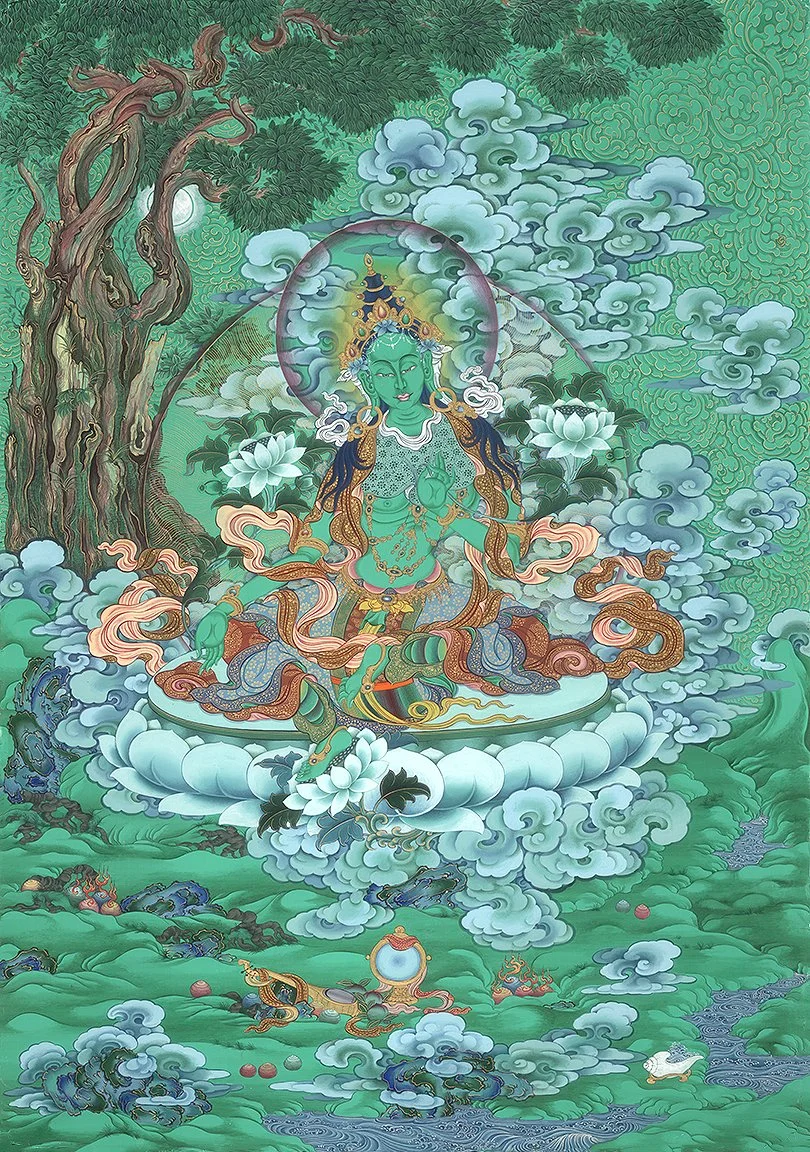
In this image, Green Tara radiates youthful energy and graceful strength. She sits upon a lotus throne surrounded by lush green mountains, flowing water, clouds, trees, and blooming white lotuses, creating a landscape of protection, healing, and natural abundance. Her right leg extends forward, with her foot resting on a lotus, showing that she is ready to rise instantly and enter the world to relieve suffering. Her left leg remains folded in meditation, representing inner stability and spiritual wisdom. Together, this posture shows the balance between contemplation and compassionate action.
Green Tara holds lotus flowers in both hands, symbolizing purity, awakening, and her constant presence through all conditions. Her left hand is raised near her heart, with two fingers joined to represent the union of wisdom and compassion, while the three raised fingers symbolize refuge in the Three Jewels: the Buddha, Dharma, and Sangha. Her right hand extends downward in a gesture of generosity, offering protection, blessings, and fearlessness to all beings.
The moon behind her and the soft clouds around her emphasize her serene, cooling presence, while the vibrant green landscape reflects her life-giving energy. Green Tara is peaceful yet powerful — a compassionate force who remains steady even in the face of danger, obstacles, and emotional storms.
Green Tara is one of the most beloved female figures in Tibetan Buddhism, revered as a swift and compassionate protector. Like other manifestations of Tara, she is closely connected to Avalokiteshvara, the Bodhisattva of Compassion, and is sometimes said to have been born from his tears. She is dedicated to protecting beings from the eight great fears or dangers, often understood both literally and symbolically: pride, delusion, anger, jealousy, wrong views, greed, attachment, and doubt. Her green color represents enlightened activity, vitality, renewal, and her immediate responsiveness to those who call upon her. For this reason, Green Tara is known as “the Swift One.”
In this image, Green Tara radiates youthful energy and graceful strength. She sits upon a lotus throne surrounded by lush green mountains, flowing water, clouds, trees, and blooming white lotuses, creating a landscape of protection, healing, and natural abundance. Her right leg extends forward, with her foot resting on a lotus, showing that she is ready to rise instantly and enter the world to relieve suffering. Her left leg remains folded in meditation, representing inner stability and spiritual wisdom. Together, this posture shows the balance between contemplation and compassionate action.
Green Tara holds lotus flowers in both hands, symbolizing purity, awakening, and her constant presence through all conditions. Her left hand is raised near her heart, with two fingers joined to represent the union of wisdom and compassion, while the three raised fingers symbolize refuge in the Three Jewels: the Buddha, Dharma, and Sangha. Her right hand extends downward in a gesture of generosity, offering protection, blessings, and fearlessness to all beings.
The moon behind her and the soft clouds around her emphasize her serene, cooling presence, while the vibrant green landscape reflects her life-giving energy. Green Tara is peaceful yet powerful — a compassionate force who remains steady even in the face of danger, obstacles, and emotional storms.