 Image 1 of 1
Avalokiteshvara, known as Chenrezig in Tibetan Buddhism, is one of the most beloved bodhisattvas and is revered as the embodiment of the compassion of all Buddhas. Bodhisattvas are enlightened beings who are moved by such deep compassion that they remain engaged with the world in order to help all beings move toward liberation. Avalokiteshvara is especially important in Tibet, where he is regarded as the patron protector of the Tibetan people. Tibetan Buddhists also believe that the Dalai Lama is a manifestation of Avalokiteshvara’s compassionate presence.
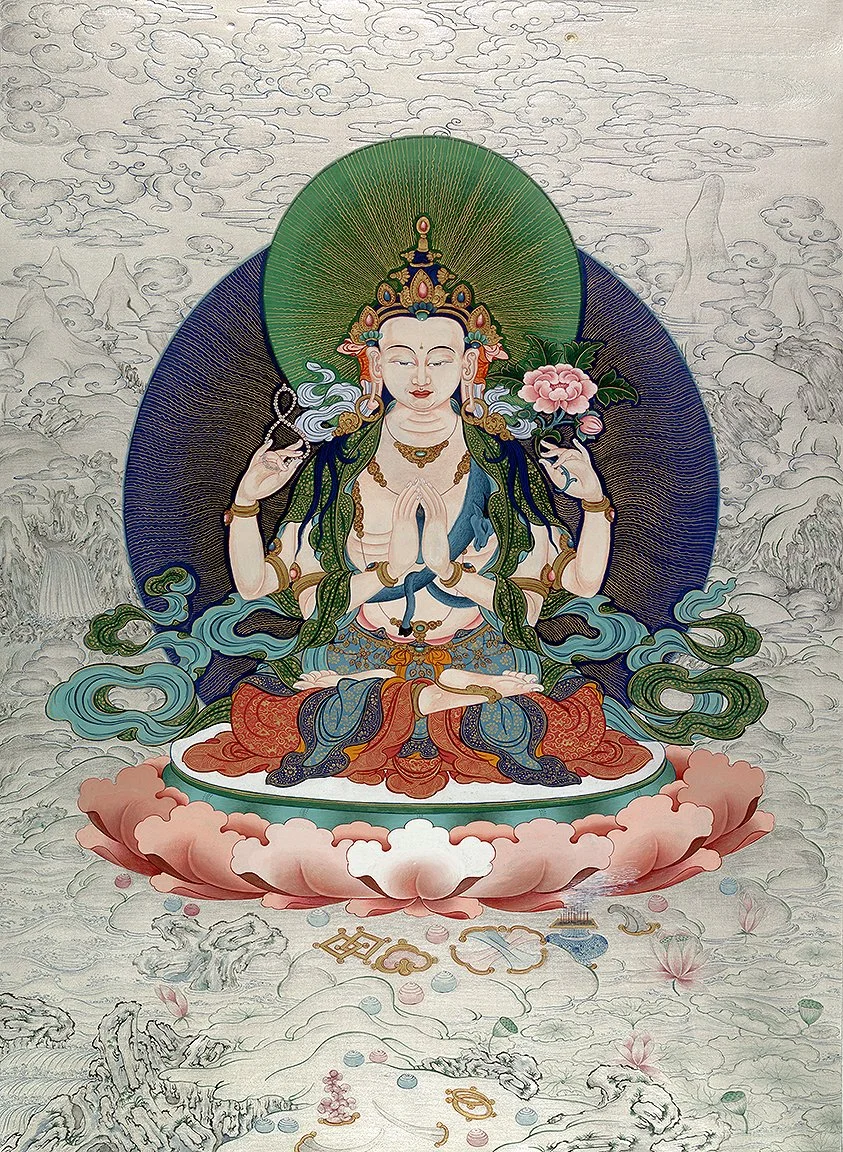
Avalokiteshvara is often shown as white in color, symbolizing purity, peace, and the stainless nature of awakened compassion. In his four-armed form, he represents the four boundless qualities of a bodhisattva: loving-kindness, compassion, sympathetic joy, and equanimity. His central hands are joined at his heart in a gesture of prayer and devotion, expressing his vow to relieve the suffering of all beings. His other hands hold sacred objects, including a lotus flower, symbolizing purity and awakening, and a mala, representing continuous prayer, meditation, and compassionate activity.
In this artwork, Avalokiteshvara sits peacefully in full lotus posture on a soft pink lotus throne, surrounded by mountains, clouds, water, and offerings. The large green and deep blue halos behind him create a sense of radiant stillness and spiritual protection. His calm face and balanced posture suggest deep meditation, while the flowing scarves and delicate lotus beside him bring softness and grace to the image. Together, these details present Avalokiteshvara as both serene and active — a compassionate presence who listens to the suffering of the world and responds with endless care.
Avalokiteshvara, known as Chenrezig in Tibetan Buddhism, is one of the most beloved bodhisattvas and is revered as the embodiment of the compassion of all Buddhas. Bodhisattvas are enlightened beings who are moved by such deep compassion that they remain engaged with the world in order to help all beings move toward liberation. Avalokiteshvara is especially important in Tibet, where he is regarded as the patron protector of the Tibetan people. Tibetan Buddhists also believe that the Dalai Lama is a manifestation of Avalokiteshvara’s compassionate presence.
Avalokiteshvara is often shown as white in color, symbolizing purity, peace, and the stainless nature of awakened compassion. In his four-armed form, he represents the four boundless qualities of a bodhisattva: loving-kindness, compassion, sympathetic joy, and equanimity. His central hands are joined at his heart in a gesture of prayer and devotion, expressing his vow to relieve the suffering of all beings. His other hands hold sacred objects, including a lotus flower, symbolizing purity and awakening, and a mala, representing continuous prayer, meditation, and compassionate activity.
In this artwork, Avalokiteshvara sits peacefully in full lotus posture on a soft pink lotus throne, surrounded by mountains, clouds, water, and offerings. The large green and deep blue halos behind him create a sense of radiant stillness and spiritual protection. His calm face and balanced posture suggest deep meditation, while the flowing scarves and delicate lotus beside him bring softness and grace to the image. Together, these details present Avalokiteshvara as both serene and active — a compassionate presence who listens to the suffering of the world and responds with endless care.